
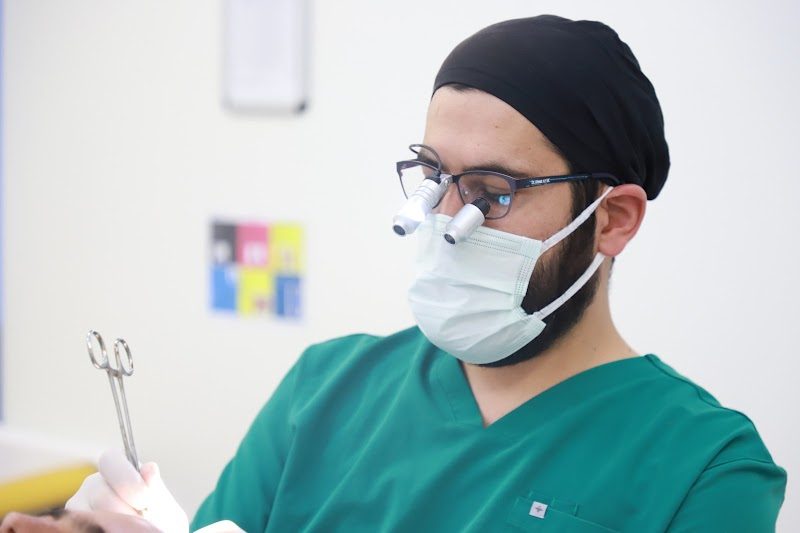
Dr. Ahmet Ayık is a physician practising Eyebrow Transplant in Sancaktepe, Istanbul.
FUE hair transplant is a hair restoration method in which follicles are removed one by one from the donor area with a fine punch and placed into pre-made channels. This page covers the steps, FUE vs DHI, sapphire FUE, the recovery timeline, risks, cost factors and choosing a doctor.
duration420 min
recovery12 days
resultPermanent
price₺28.000–95.000
Ranked by plan, rating and patient reviews
Dr. Ahmet Ayık is a physician practising Eyebrow Transplant in Sancaktepe, Istanbul.
Dr. Ömer Ambarcıoğlu is a physician practising Rhinoplasty in Trabzon.
FUE hair transplant is a method in which hair follicles are taken one by one from the donor area and moved to thinning areas. FUE stands for follicular unit excision. Follicles are taken in their natural groups, called grafts, each holding one to four hairs. For an overview of all methods, see the hair transplant page.
FUE has largely replaced the older strip method, FUT. In the strip method, a band of skin is removed from the back of the head, leaving a linear scar. In FUE, follicles are taken as tiny circles, so the donor area is left with scattered dot-like marks. These are usually hidden when hair grows, but can show with a very short cut.
FUE is done under local anaesthetic and usually takes 6 to 8 hours, depending on the number of grafts. It has three main stages: extraction, channel opening and placement.
Protecting the donor area depends on taking follicles in a spread-out pattern. Taking too many from one spot thins that area. This thinning is permanent, because no new follicle forms where one has been removed. The doctor measures donor density and sets a safe graft number. Extraction is kept within the zone at the back and sides that resists hair loss. Follicles taken from outside that zone may shed later.
Sapphire FUE is FUE in which the channels are opened with sapphire-tipped blades instead of steel. Extraction and placement stay the same. Sapphire tips are said to make smoother, smaller channels. Studies comparing results with the classic method are limited. Planning and the team's experience matter more for the outcome.
FUE and DHI differ in how grafts are placed; extraction is the same in both. In FUE, all channels are opened first and grafts are then placed with forceps. In DHI, grafts are loaded into pen-like tools called implanters. The pen opens the channel and places the graft in one move.
| Feature | FUE | DHI |
|---|---|---|
| Extraction | One by one with a fine punch | One by one with a fine punch |
| Channel opening | Separate step, steel or sapphire blade | No separate step, implanter pen opens it |
| Placement | Forceps | Implanter pen |
| Typical use | Larger bald areas, higher graft needs | Smaller areas, adding density between existing hair |
| Shaving | Recipient area usually shaved | Recipient area can sometimes stay unshaven |
| Cost | Often lower | Often higher |
Strong studies directly comparing the two methods are few. The right choice depends on the size of the area, hair type and expectations. The doctor decides after an examination.
FUE suits people whose hair loss has settled into a pattern and who have an adequate donor area. It is often chosen for male pattern baldness with larger bald areas. It also appeals to people who wear their hair short and do not want a linear scar.
FUE may not be advised when:
The doctor decides suitability after an examination.
Skin healing usually takes 10 to 14 days, while the result appears over months. Swelling on the forehead and tenderness at the donor area are common in the first days. Crusts in the transplanted area usually fall off within 7 to 10 days, and the small donor wounds close in that time too. The clinic will explain when and how to do the first wash. Following these instructions helps keep grafts in place. Avoid touching or scratching the area early on.
Transplanted hairs may shed in the first weeks (shock loss). New hair usually starts growing between the third and fourth month. The final result is assessed at one to one and a half years. Most people go back to desk work within a few days to a week. Follow your doctor's timing for exercise, swimming and wearing a hat.
The common side effects of FUE are swelling, pain, itching, redness and crusting. These are usually temporary. Other risks to be aware of are:
The cost of FUE depends mostly on the number of grafts and how the clinic works. Other factors are:
You can see the current range in the price section of this page. The exact fee is confirmed after the consultation.
FUE is a surgical procedure and should be done in a licensed healthcare facility under a doctor's responsibility. In Turkey it is mostly performed by dermatologists and by plastic, reconstructive and aesthetic surgeons. You can compare them in the doctor list by city. Questions to ask:
The information on this page is for general information only and is not medical advice. The suitable method for you can only be determined by a physician examination.
₺28.000 – ₺95.000
Türkiye national average. City-by-city price table:
City-by-city price table →